
Pittsburgh is a city of hills, bridges, tunnels, and steep, winding streets. That is part of its charm, and it is also one of the hardest environments a car can face. Every time you roll down a long grade and ease up to a red light at the bottom, your brakes are doing more work than they would on flat ground. Over months and years, that extra work adds up to faster wear and, sometimes, trouble that shows up without much warning. This guide explains how hills wear out your brakes, the signs of brake wear to watch for, the habits that help brakes last, and how a mobile mechanic can handle brake repair in Pittsburgh at your home or workplace.
How Brakes Slow a Car
Most cars use disc brakes, at least on the front wheels. A metal disc called a rotor spins with each wheel. When you press the pedal, hydraulic pressure pushes brake pads against the rotor, and friction slows the car. That friction turns the car’s motion into heat, and the pads and rotors are built to absorb it and shed it into the air. The pad material is designed to wear slowly as it does this work, and the rotors wear too. Some vehicles use drum brakes at the rear, which work in a similar way using shoes pressed against the inside of a drum. In every case, the brakes are converting your car’s energy into heat, and the more energy there is to remove, the more heat and wear there will be.
Why Hills Make Brakes Work Harder
When a car goes downhill, gravity adds energy to its motion. To keep your speed steady, something has to remove that extra energy, and if you are using the brake pedal to do it, the brakes take it all. A long descent can mean continuous or repeated braking for a long stretch, which builds heat in the pads, rotors, and brake fluid. Compared with flat driving, where you brake in short bursts and the brakes have time to cool, a hilly route gives brakes less chance to recover. Weight matters too. A car loaded with passengers, cargo, or a trailer carries more energy and demands more from the brakes. The result is faster pad wear, more rotor wear, and a higher chance of heat related trouble.
What Happens When Brakes Get Too Hot
Heat is the main enemy of brakes, and when it builds up beyond what the system can handle, several things can happen:
- Brake fade, where the pads and rotors lose some of their grip and the pedal needs more effort for the same stopping power
- Glazed pads, where the surface of the pad hardens and becomes slick, reducing friction and often causing squealing
- Warped or uneven rotors, which can cause pedal pulsation or steering wheel vibration
- Overheated brake fluid, which can develop vapor bubbles and make the pedal feel soft or sink
- Accelerated wear on pads, rotors, and calipers
- A burning smell from the brakes after a long descent
Brake fade is one of the most dangerous because it tends to come on gradually, right when you need to stop. Any time your brakes feel weaker than usual, treat it as a warning and have them inspected.
Signs of Brake Wear to Watch For
Brakes usually give notice before they fail. These are the signs to pay attention to:
- A high pitched squeal, which can come from the wear indicator on the pad touching the rotor
- A deep grinding or growling noise, which can mean the pad material is gone and metal is rubbing on metal
- A soft, spongy, or low pedal
- A pedal that sinks toward the floor
- Vibration or pulsing in the pedal or steering wheel while braking
- The car pulling to one side when you brake
- A burning smell after driving, especially after descents
- A brake warning light on the dashboard
- Brake dust that is unusually heavy on one wheel
- Fluid leaking near a wheel, or a brake fluid level that keeps dropping
If you notice a grinding sound, a soft pedal, or a car that does not slow properly, stop driving and get help instead of continuing to your destination. Brakes are a safety system, and a tow is far better than a collision.
How to Brake on Long Hills
Good technique can reduce brake wear and heat considerably. Many vehicles let you use the engine to help control speed on a descent, either through a lower gear selection or a manual shift mode. This is often called engine braking, and it lets you use the pedal less. How it works varies by car, so check your owner’s manual for the right method. Other helpful habits include:
- Slow down before the steepest part of a descent, not in the middle of it
- Brake firmly for a short time and then release, instead of dragging the pedal the whole way down
- Leave extra following distance so you can slow gradually
- Avoid resting your foot on the pedal when you are not braking
- Lighten the load when you can, since extra weight means extra heat
- Pull over safely if the brakes feel hot or weak, and let them cool
These habits make a noticeable difference in how long pads and rotors last, especially in a hilly place like Pittsburgh.
How Pittsburgh Conditions Add More Wear
Hills are only part of the story. Winters bring snow, ice, and heavy road salt, and salt speeds up rust on rotors, calipers, slide pins, and brake lines. Stop and go traffic over bridges and through tunnels, steep driveways, and short trips add more wear. Moisture and salt can leave calipers sticking and rotors rusting, especially when a car sits for a few days. Our article on bridges, hills, and winters and what Pittsburgh roads do to your car explains how these local conditions affect the whole vehicle, and the brakes are among the first parts to show it. Washing the underside of your car in winter, when conditions allow, helps remove salt before it does damage.
Stuck Calipers and Sticking Hardware
The caliper squeezes the pads against the rotor, and it slides on pins or brackets that need to move freely. Rust, dirt, and old lubricant can make them stick. A caliper that does not release properly keeps a pad in light contact with the rotor even when you are off the pedal. Symptoms include a burning smell, a wheel that is much hotter than the others, uneven pad wear, pulling to one side, and reduced fuel economy. Hilly driving adds heat that can make this problem worse. A technician can free up and lubricate the hardware or replace parts that are seized.
Brake Fluid and Why It Matters on Hills
Brake fluid transmits the force from your foot to the brakes, and it absorbs moisture over time. Water in the fluid lowers its boiling point, which makes it more likely to form vapor bubbles under heavy braking, and bubbles compress, which leads to a soft pedal. This is one reason brake fluid service matters, and your owner’s manual lists the recommended interval. If you drive a lot of hills or tow, ask a technician whether your fluid should be checked sooner.
What a Brake Inspection Covers
A thorough inspection looks well beyond the pads. A technician will typically:
- Ask about noises, pedal feel, and when the symptoms happen
- Remove the wheels to see the pads, rotors, calipers, and hardware
- Measure the remaining pad thickness and the rotor thickness
- Look for uneven wear, glazing, scoring, cracks, and rust
- Check the calipers and slide pins for free movement
- Inspect the brake lines and hoses for cracks, leaks, or corrosion
- Check the brake fluid level and condition
- Look at the wheel bearings and suspension if the symptoms point that way
The result should be a clear explanation of what is worn, what is fine, and what can wait. A good technician shows you the parts and explains the options in plain language.
What Brake Repair Usually Involves
The right repair depends on what the inspection finds. Depending on your vehicle, it may include replacing pads, replacing or resurfacing rotors where appropriate, cleaning and lubricating contact points, replacing worn hardware, servicing or replacing a caliper, replacing a damaged brake line, or flushing the brake fluid. Pads and rotors work together, so they are often replaced as a set when the rotors are worn or damaged. Cutting corners, such as skipping needed parts or putting new pads on worn rotors, can lead to noise, uneven wear, and reduced stopping power, so the goal is a complete and correct repair.
How Often Should Brakes Be Checked?
There is no one answer, because it depends on the vehicle and how it is driven. Your owner’s manual lists inspection guidance, and hilly driving, heavy loads, frequent stop and go traffic, and towing all count as demanding use that may call for more frequent checks. A good habit is to have your brakes looked at whenever you have the tires rotated or the car serviced, and any time you notice a change in how they sound or feel. Early attention usually means a simpler and smaller repair.
If Something Else Seems Off
Brake trouble is sometimes one symptom among several. If the car is also slow to start or will not start, our guide to the top 10 reasons your car won’t start and how to get back on the road covers the common causes, and a technician can look at everything in one visit.
Can a Mobile Mechanic Handle Brake Repair?
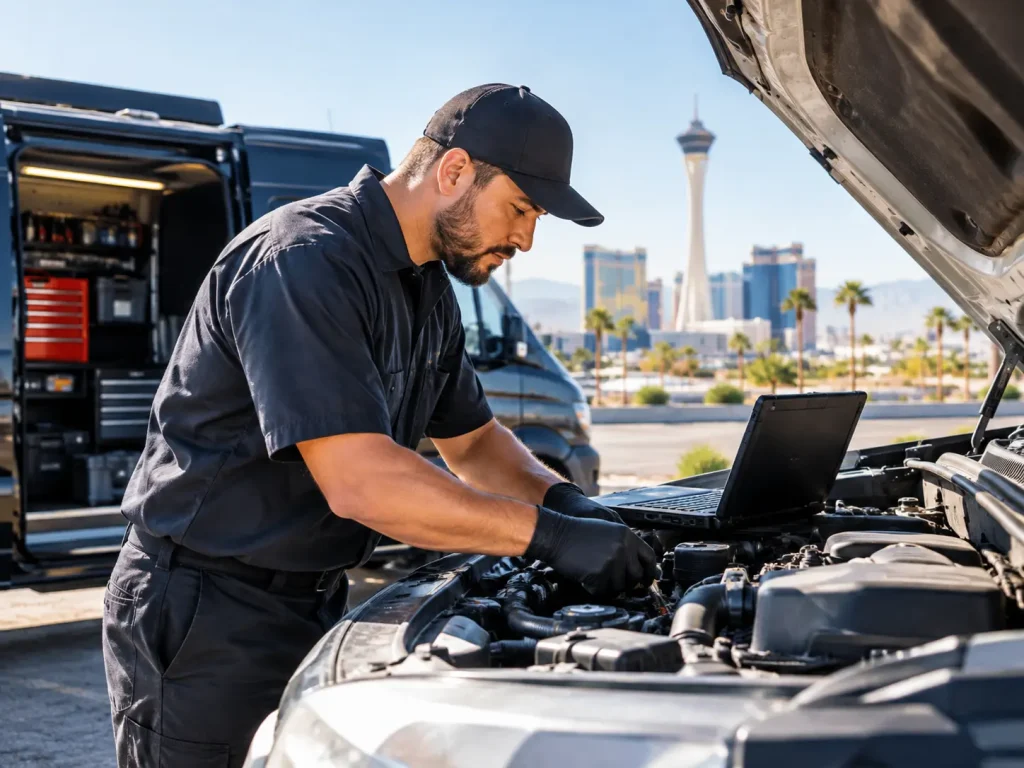
In many cases, yes. A mobile mechanic can come to your home or workplace in the Pittsburgh area, inspect the brakes, and handle many common jobs on site, including pad replacement, rotor replacement, hardware service, and caliper work. That saves you the trouble of arranging a ride and waiting at a shop. Some situations, such as a severe hydraulic problem, major suspension work, or a repair that needs a lift or specialized equipment, may need a full shop, and a trustworthy technician will tell you honestly when that is the case. When you book, describe the noises, when they happen, how the pedal feels, and your vehicle’s year, make, model, and mileage, and mention if you drive a lot of hills or carry heavy loads.
Do Not Wait for the Grinding to Start
Brakes that are wearing out rarely stop working all at once. They give you noise, a change in the pedal, or a smell. Acting at that stage usually means a simple pad service, while waiting can lead to damaged rotors and calipers and, worse, a real safety problem. If you live and drive in hilly Pittsburgh and it has been a while since your brakes were checked, schedule an inspection.
To learn more about our services, visit our homepage. If you would like your brakes inspected, reach out through our contact us page and we will come to you anywhere in the Pittsburgh area.