
Pittsburgh has more bridges than nearly any other city in the country, a fact that becomes very real to anyone navigating the constant crossings over the Allegheny, Monongahela, and Ohio rivers on a daily commute. Add in the city’s famously steep hills, neighborhoods like Mount Washington perched dramatically above the rivers below, and a genuinely harsh winter season that brings both heavy snow and road salt, and you get a combination of driving conditions that puts real strain on a vehicle’s brakes, suspension, and battery all at once.
Why Pittsburgh’s Bridges Create Their Own Specific Challenge
Bridge decks behave differently from ordinary roadway, since they are exposed to cold air from both above and below, causing them to freeze earlier and stay icy longer than the surrounding streets even when air temperature alone would not suggest ice is a concern. This is why bridges are so often the site of unexpected black ice, catching drivers off guard on a crossing that felt perfectly safe just moments before on the approach road. With as many bridges as Pittsburgh has woven into nearly every commute, this risk is not an occasional concern, it is a near daily reality for much of the winter season.
Beyond the ice risk, the expansion joints built into bridge decks to accommodate temperature related movement create a repeated, rhythmic jolt to a vehicle’s suspension every time it crosses, and with Pittsburgh commuters often crossing multiple bridges during a single trip, this adds up to considerably more of this specific kind of impact than a driver in a bridge sparse city would ever experience.
How The City’s Steep Hills Add Their Own Demands
Neighborhoods like Mount Washington, the South Side Slopes, and Troy Hill all require navigating grades steep enough to place real strain on brakes during descents, since sustained downhill driving demands continuous braking to control speed against gravity rather than the shorter, intermittent stops typical of flat road driving. This generates considerably more heat than routine braking, accelerating pad wear and, in more severe cases, contributing to brake fade on the longest descents.
Suspension components take their own toll from this terrain as well, since constant elevation change combined with the uneven pavement common on some of Pittsburgh’s older hillside streets asks struts and shocks to work harder managing the vehicle’s weight transfer than they would on flatter, more consistent roads.
Why Winter Adds A Third Layer On Top Of Bridges And Hills
Pittsburgh winters bring heavy road salt use to manage ice on both the hills and the bridge crossings, and this salt accelerates undercarriage corrosion over time, affecting the very brake lines and suspension components already under extra strain from the terrain itself. This means Pittsburgh vehicles face a combination of mechanical wear from hills and bridges alongside chemical corrosion from winter salt, two separate forms of damage attacking many of the same components simultaneously.
Cold winter temperatures also place their own demand on batteries, reducing cranking power right when a vehicle already needs reliable starting power to handle steep hill starts and the general demands of winter driving. A battery already weakened by summer heat or several years of use may struggle specifically during this combination of cold temperatures and the added electrical demand that comes with winter driving conditions.
Signs This Combination Is Wearing Down Your Vehicle
A high pitched squealing sound from brake wear indicators, a car that pulls to one side or shows uneven tire wear after repeated bridge expansion joint impacts, or a suspension that feels noticeably bouncier after a winter of hill and bridge driving are all worth having checked. A battery that cranks slower during cold mornings, particularly right after a demanding hill climb, suggests the combined winter and terrain strain may already be taking a toll. If you have experienced a starting failure during a Pittsburgh winter, our guide on the top 10 reasons your car won’t start and how to get back on the road covers a range of causes worth ruling out alongside these other concerns.
Why Standard Maintenance Schedules Fall Short Here
Manufacturer recommended maintenance intervals are generally built around average driving conditions, which do not account for the combined strain that Pittsburgh’s bridges, hills, and winter salt add together. Drivers who regularly navigate this specific combination should consider checking brakes and suspension every six months rather than annually, and testing battery health proactively each fall before winter conditions arrive in full force.
This is especially worth keeping in mind for anyone who moved to Pittsburgh from a flatter, milder region and is used to thinking of vehicle maintenance purely in terms of mileage. A car that performed reliably for years elsewhere can start showing brake, suspension, and battery symptoms noticeably sooner once it takes on a regular diet of Pittsburgh bridges, hills, and winter salt, simply because the driving and climate conditions themselves have changed even if the total mileage looks unremarkable on paper.
Undercarriage inspections deserve a specific mention as well, given how directly winter salt interacts with the mechanical wear already happening on brake lines and suspension components from the hills and bridges. Checking for early corrosion each spring, once the heaviest salt season has passed, gives you a chance to address surface rust with a simple treatment before it has another full season to progress into something more serious.
Why A Mobile Mechanic Fits Pittsburgh’s Combined Challenges
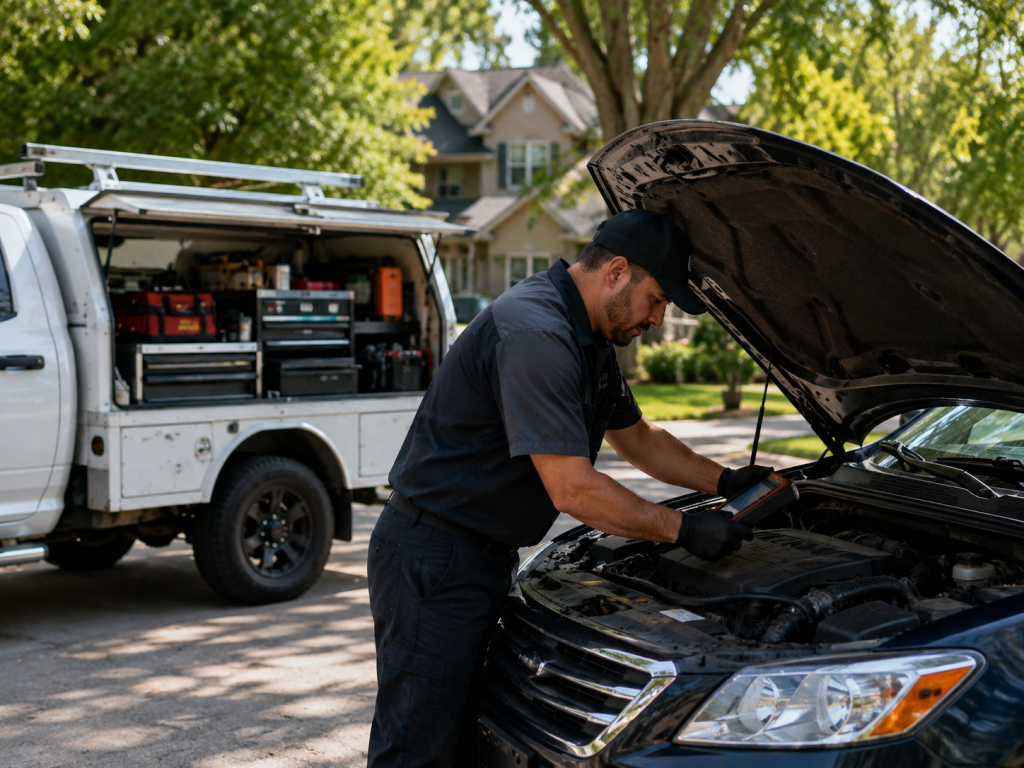
Given how many separate systems this combination of terrain and climate affects at once, having a technician familiar with Pittsburgh’s specific driving conditions come directly to your home or workplace offers a real advantage. A mobile mechanic can inspect brakes, suspension, and battery health together in one visit, addressing the full range of wear this environment causes rather than treating each concern in isolation.
We covered the broader benefits of this approach in our article on why mobile mechanics are better than traditional auto shops in Pittsburgh, which explains how convenience and local familiarity come together, particularly useful for the kind of comprehensive maintenance Pittsburgh’s roads genuinely require.
Stay Ahead Of What Pittsburgh’s Roads Do To Your Car
Pittsburgh’s combination of bridges, steep hills, and harsh winters is part of what makes the city such a distinctive place to drive, but it also means brakes, suspension, and batteries all face more demanding conditions here than they would in a flatter, milder climate. Paying attention to early warning signs and adjusting your maintenance schedule to account for all three factors together, rather than treating them separately, is one of the most effective ways to keep your car reliable through another Pittsburgh winter. Few cities ask this particular combination of a vehicle, which is exactly why a maintenance approach built for average conditions elsewhere often falls short here.
If it has been a while since your vehicle had a thorough inspection, visit our homepage to learn more about our services, or reach out through our contact us page to schedule a visit at your home or office anywhere in the Pittsburgh area.
A little proactive attention now can help your car keep up with everything Pittsburgh’s bridges, hills, and winters ask of it every single year.